
Staff Story
Powered by Philanthropy: Point-of-Care Ultrasound Supporting Care at Home
Lakeridge Health Recognized Nationally for Advancing Patient-Centred Palliative Care
Lakeridge Health has been recognized by Healthcare Excellence Canada (HEC) for its innovative approach to delivering compassionate, high-quality care closer to home for palliative patients in Durham Region.
Through HEC’s Right Care Challenge, Lakeridge Health was selected to receive the Innovation Plan II Award and additional awards, totaling $10,500, to support the development and expansion of the Home Palliative Paracentesis Program – a physician-led initiative that reduces unnecessary hospital visits while improving comfort and quality of life for patients with advanced illness.
Delivering the Right Care, at the Right Time, in the Right Place
The Right Care Challenge is a national quality improvement initiative led by Healthcare Excellence Canada, an independent not-for-profit organization funded primarily by Health Canada. The program supports health-care teams across the country in implementing solutions that ensure patients receive appropriate, evidence-based care when and where it is needed most.
“Being recognized through the Right Care Challenge reinforces the value of designing programs around what truly matters to patients,” said Dr. Vance Tran, Palliative Care Physician and Medical Lead of the Home Palliative Paracentesis Program at Lakeridge Health. “For many of our patients, avoiding a hospital visit is not just a convenience – it’s essential to preserving quality of life and minimizing the physical and emotional burden of repeated transfers.”
Addressing a Critical Gap in Care
In Durham Region, approximately 900 palliative patients are supported annually through the Durham Regional Cancer Centre (DRCC). Many experience ascites, a condition that causes abdominal swelling, pain, and shortness of breath. While paracentesis provides immediate symptom relief, no community-based paracentesis service previously existed in Durham Region, and the procedure was only available in hospital settings such as the emergency department or the Rapid Response Oncology Clinic.
Each month, dozens of patients were travelling to hospital solely for this procedure, placing additional strain on emergency departments and other acute-care services.
“For patients with advanced illness, repeated hospital transfers can be exhausting and often run counter to their goals of care,” said Dr. Aynharan Sinnarajah, Division Head of Palliative Care at Lakeridge Health. “We saw a clear opportunity to better align care with patients’ wishes by offering a safe, effective procedure in the home environment.”
Bringing Compassionate Care Home
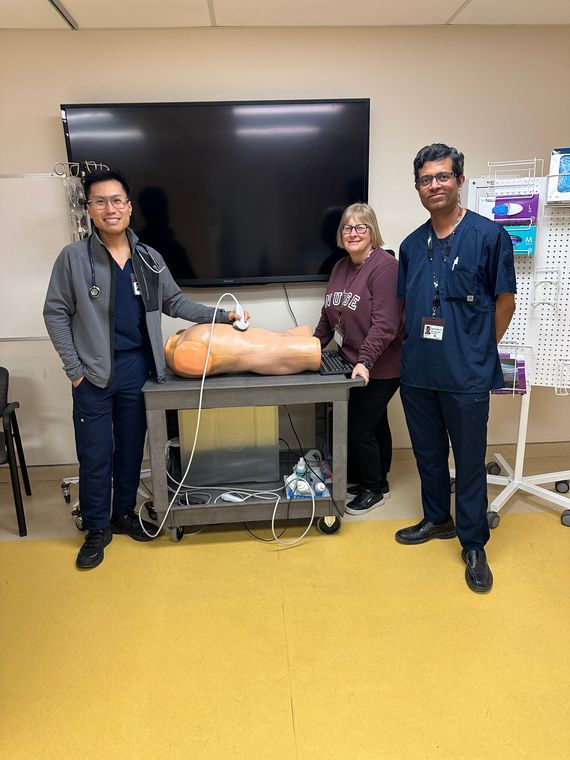
Launched in May 2024, the Lakeridge Health Home Palliative Paracentesis Program brings this essential procedure directly into patients’ homes using point-of-care ultrasound (POCUS). The clinically led service is designed for homebound palliative patients who can safely receive care outside of hospital.
“This program allows us to deliver patient-centered care that prioritizes comfort and dignity,” said Dr. Tran. “It’s a good example of how innovation doesn’t always mean new technology but rather rethinking where and how care is delivered.”
The interdisciplinary team includes nine palliative care physicians trained in POCUS, along with support from the Ontario Health at Home team.
“These awards reflect the strength of collaboration across our clinical teams and our commitment to quality improvement,” noted Colleen Wilkinson, Director, Specialty Medicine at Lakeridge Health. “What’s more, the Home Palliative Paracentesis Program is a clear example of how Lakeridge Health is leading system change – improving the patient experience while responsibly using health-care resources.”
Donor Support Powering Care at Home
The program is supported by four portable point-of-care ultrasound (POCUS) machines, along with Apple iPads and AirTags, all generously funded through donations to Lakeridge Health Foundation’s Our Cancer Campaign, which raised more than $21 million for cancer care across Durham Region and beyond.
For palliative care teams, donor support has had an immediate and tangible impact.
“Each palliative care team now has easy access to an ultrasound,” said Connie Stamp, Medical Assistance in Dying (MAiD) Resource Lead at Lakeridge Health. “That means faster relief from symptoms like discomfort and shortness of breath, and fewer hospital visits for patients and their families.”
According to Dr. Tran, donor-funded equipment made the Home Palliative Paracentesis Program possible.
“Donor dollars have been essential to the success of this program,” he said. “The portable ultrasound machines allow us to accurately assess for ascites (abdominal fluid) and perform paracentesis (a drainage procedure) at the bedside in patients’ homes. Previously, our most frail patients had to travel to hospital for this care. Donations have helped preserve comfort, dignity, and choice by keeping patients at home whenever possible.”
Because the equipment was available at launch, the impact was immediate.
“Dozens of emergency department visits and hospital admissions have already been avoided, and patients are experiencing faster relief from distressing symptoms,” added Dr. Tran. “Most importantly, donor support has enabled safer, timelier, and more compassionate end-of-life care.”
Donor funding is also helping Lakeridge Health lead innovation beyond a single program.
“Donor dollars allow us to offer new, innovative palliative initiatives that address gaps in care across Durham Region,” said Dr. Sinnarajah. “It gives us the evidence we need to advocate for sustainable, long-term health system funding and continue improving how palliative care is delivered in both hospital and community settings.”